
fiat 500 manual
Fiat 500 Manual: A Comprehensive Guide

This manual provides detailed guidance on all aspects of your Fiat 500‚ from basic operation to in-depth maintenance and troubleshooting.
It leverages resources like Fiat ePER and openPER for parts identification‚ alongside community forums for support.
The Fiat 500‚ a beloved icon of Italian automotive design‚ boasts a rich history and a devoted following. This manual serves as your comprehensive companion to understanding and maintaining this charming vehicle. Whether you’re a first-time owner or a seasoned enthusiast‚ this guide will unlock the full potential of your Fiat 500.
From its origins as a compact city car to its modern iterations‚ the Fiat 500 has consistently represented style‚ efficiency‚ and fun. This manual covers a range of models and specifications‚ ensuring relevance for various year makes. We’ll delve into the specifics of the FIRE 1.4 TJet engine‚ available in both 120HP and 150HP configurations‚ and explore the intricacies of its braking and electrical systems.
Furthermore‚ this resource directs you to valuable online resources‚ including Fiat ePER and openPER‚ for accurate parts identification. Accessing online forums will connect you with a vibrant community of Fiat 500 owners‚ offering shared knowledge and support. Prepare to embark on a journey of discovery and confident ownership!
Understanding Your Fiat 500 Manual
This Fiat 500 manual is structured to provide a clear and logical progression through all aspects of vehicle ownership. It’s designed as a ‘personal tutor’‚ guiding you from initial operation to complex troubleshooting. Each section builds upon the last‚ ensuring a comprehensive understanding of your vehicle’s systems.
Key components are explained in detail‚ alongside guidance on routine maintenance‚ like checking fluid levels and tire pressure. The manual also features a dedicated section on diagnostic trouble codes (DTCs)‚ helping you decipher error messages and address potential issues. Diagrams illustrating fuse box locations are included for easy access.
Leveraging online resources like Fiat ePER and openPER is encouraged for parts identification and repair information. Remember to utilize online Fiat forums to connect with other owners and share experiences. This manual‚ combined with these resources‚ empowers you to confidently maintain and enjoy your Fiat 500.
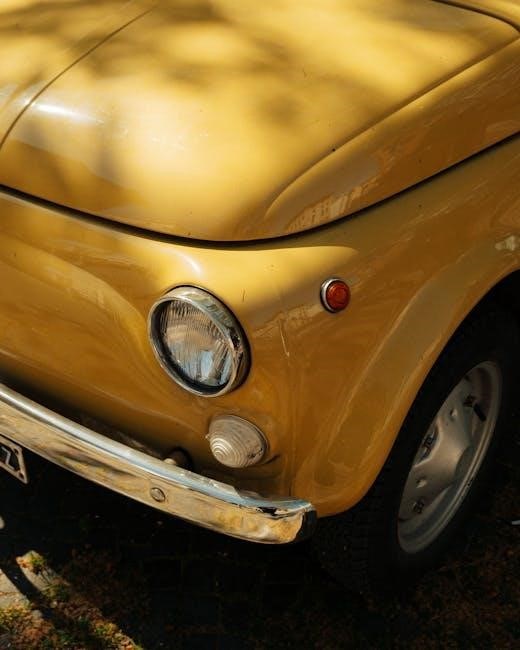
Vehicle Identification & Components
Locate your Vehicle Identification Number (VIN) and explore detailed model variations. Understand key components‚ utilizing resources like Fiat ePER for accurate identification.
Vehicle Identification Number (VIN) Location
The Vehicle Identification Number (VIN) is a unique 17-character code crucial for identifying your specific Fiat 500. It’s essential for warranty claims‚ service records‚ and tracking vehicle history. Locating the VIN is straightforward.
On most Fiat 500 models‚ you’ll find the VIN in several places. Primarily‚ it’s stamped on a metal plate affixed to the driver’s side dashboard‚ visible through the windshield. Look for a rectangular label. Additionally‚ the VIN is often present on the driver’s side doorjamb sticker‚ and within your vehicle’s registration documents and insurance card.
Confirming the VIN across these locations ensures accuracy. Utilizing online VIN decoders‚ accessible through resources like Fiat ePER‚ can provide detailed information about your vehicle’s specifications and manufacturing details. Always verify the VIN before performing any service or repair work.
Fiat 500 Model Variations & Specifications
The Fiat 500 has evolved through several iterations‚ each with distinct specifications. Early models featured the iconic 1.2L engine‚ while later versions introduced the more powerful 1.4 TJet engine‚ available in 120HP and 150HP configurations. Trim levels‚ such as Pop‚ Lounge‚ and Abarth‚ further differentiate models.
Specifications vary based on year and trim. Key differences include engine output‚ transmission options (manual or automatic)‚ available features like infotainment systems‚ and safety technologies. The Abarth version boasts performance upgrades‚ including a sport-tuned suspension and enhanced braking system.
Utilizing resources like Fiat ePER allows you to pinpoint the exact specifications for your specific VIN. Understanding your model’s details is crucial for accurate maintenance‚ parts ordering‚ and ensuring compatibility when performing repairs. Referencing the manual alongside online catalogues provides a comprehensive overview.
Key Components Overview
The Fiat 500’s core components demand attention for optimal performance. The FIRE 1.4 TJet engine‚ available in 120HP and 150HP variants‚ is central‚ alongside its associated fuel and ignition systems. The braking system‚ crucial for safety‚ includes discs‚ pads‚ and hydraulic lines.
The electrical system powers everything from the infotainment to the engine control unit (ECU). Key elements include the battery‚ alternator‚ wiring harnesses‚ and fuse boxes – locations detailed within the manual. Suspension components‚ like shocks and springs‚ ensure ride comfort and handling.
Accessing parts information through Fiat ePER and openPER aids in identifying these components. Familiarity with their location and function‚ as outlined in this manual‚ is essential for routine maintenance and troubleshooting. Understanding these systems empowers informed repairs and upkeep.
Operation & Maintenance
Regular checks of fluid levels‚ tire pressure‚ and adherence to the maintenance schedule are vital. Dashboard indicators provide crucial alerts for optimal vehicle health.
Starting and Stopping the Engine
Starting your Fiat 500 is generally straightforward. Ensure the parking brake is engaged‚ and the gear selector is in neutral (manual transmission) or Park (automatic). Insert the key into the ignition and turn it to the ‘ON’ position. Allow the fuel pump to prime – you’ll hear a whirring sound. Then‚ turn the key further to ‘START’ and hold until the engine ignites. Release the key once the engine is running smoothly.
For models with Start/Stop technology‚ ensure the system is enabled. Depress the clutch pedal (manual) or brake pedal (automatic) fully. The engine will automatically restart when you release the pedal or select a gear.
To stop the engine‚ shift the gear selector to neutral or Park and turn the ignition key to the ‘OFF’ position. Allow the engine to idle briefly before switching off. Avoid abrupt shutdowns‚ as this can strain the engine components. Remember to engage the parking brake before exiting the vehicle.
Understanding the Dashboard Indicators
The Fiat 500’s dashboard utilizes a series of illuminated icons to communicate vital vehicle information. Key indicators include the engine management light (check engine)‚ oil pressure warning‚ battery warning‚ and brake system warning. A lit ‘Check Engine’ light often indicates a Diagnostic Trouble Code (DTC) requiring investigation – resources like online Fiat forums can assist in decoding these.
Other important symbols include the fuel level‚ coolant temperature‚ and indicators for systems like ABS and ESP. Pay close attention to the seatbelt warning light and airbag indicators. The Start/Stop system status is also displayed.
Refer to your Fiat 500 manual for a comprehensive explanation of each indicator’s meaning and recommended action. Ignoring warning lights can lead to more serious mechanical issues and potentially compromise safety. Familiarize yourself with these symbols for proactive vehicle maintenance.
Routine Maintenance Schedule
Maintaining your Fiat 500 requires adherence to a regular maintenance schedule‚ outlined in your vehicle’s manual. Essential tasks include oil and filter changes‚ typically every 12‚000 miles or annually‚ whichever comes first. Air filter replacement is also crucial for engine performance‚ usually around the same interval.
Further maintenance encompasses checking and replacing spark plugs‚ inspecting brake pads and discs‚ and ensuring proper coolant levels. Tire rotation and balancing contribute to even wear and extended tire life. Fluid checks – oil‚ coolant‚ brake fluid‚ and power steering fluid – are vital for optimal system function.
Utilize Fiat ePER to identify correct parts. Following this schedule‚ alongside addressing any warning lights promptly‚ will ensure your Fiat 500 remains reliable and safe for years to come. Record all maintenance for warranty purposes.
Checking Fluid Levels (Oil‚ Coolant‚ Brake Fluid)
Regularly checking fluid levels is crucial for your Fiat 500’s health. For oil‚ park on level ground‚ wait for the engine to cool‚ and use the dipstick – levels should be between the minimum and maximum marks. Coolant levels are checked in the expansion tank; ensure it’s between the ‘min’ and ‘max’ lines when the engine is cold.
Brake fluid is vital for stopping power. Locate the reservoir (usually near the master cylinder) and check the level – it should be near the ‘max’ mark. Low levels can indicate a leak. Power steering fluid (if applicable) also requires periodic checks‚ following the same principle.
Refer to your Fiat 500 manual for specific fluid types and locations. Utilize online resources like Fiat ePER to identify correct fluids. Top up as needed‚ but investigate any consistent fluid loss.
Tire Pressure and Maintenance
Maintaining correct tire pressure is essential for safety‚ fuel efficiency‚ and tire longevity in your Fiat 500. Recommended pressures are found on a sticker inside the driver’s side doorjamb‚ and in your owner’s manual – do not use the pressure listed on the tire sidewall.
Check pressures when tires are cold‚ using a reliable gauge. Regularly inspect tires for wear‚ damage (cuts‚ bulges)‚ and uneven tread. Rotate tires every 6‚000-8‚000 miles to promote even wear. Tread depth should be above the legal limit (1;6mm/63 thousandths of an inch).
Consider seasonal adjustments; lower pressures in cold weather‚ higher in hot. Utilize online Fiat forums for advice specific to your model. Proper tire maintenance contributes significantly to overall vehicle performance.

Troubleshooting & Repair
This section details common Fiat 500 issues‚ diagnostic trouble codes (DTCs)‚ fuse box locations‚ and battery replacement procedures for effective repairs.
Fiat Specific Error Codes (Diagnostic Trouble Codes ─ DTCs)
Understanding Fiat-specific DTCs is crucial for pinpointing issues within your Fiat 500. While generic OBD-II codes provide a baseline‚ Fiat vehicles often employ unique codes offering more granular diagnostic information; These codes‚ initially documented within Italian Fiat forums‚ require careful interpretation.
Accessing these codes typically involves using an OBD-II scanner capable of reading manufacturer-specific data. The scanner will display a code‚ which then needs to be cross-referenced with a Fiat-specific DTC list. Resources like online Fiat communities and dedicated repair manuals can aid in decoding these error messages.
Common examples might relate to the MultiJet engine‚ Dualogic transmission‚ or specific sensor failures. Correctly identifying the DTC allows for targeted repairs‚ saving time and preventing unnecessary component replacements. Remember to clear the code after addressing the issue to verify the fix.
Fuse Box Locations and Diagrams
Locating the fuse boxes within your Fiat 500 is essential for addressing electrical issues. Typically‚ Fiat 500 models (like the Ducato) feature three fuse box locations. The primary fuse box is usually situated on the dashboard‚ providing easy access for frequently checked fuses.
A second fuse box is commonly found on the passenger side‚ integrated into the right pillar. Finally‚ a third fuse box resides within the engine compartment‚ housing fuses for higher-amperage circuits. Diagrams illustrating the fuse layout for each location are vital for identification.
Referencing these diagrams (often found in the owner’s manual or online resources like ePER) allows you to quickly identify the fuse responsible for a malfunctioning component. Always disconnect the negative battery terminal before replacing any fuse to prevent short circuits.
Common Fiat 500 Issues & Solutions
Fiat 500s‚ while charming‚ can exhibit certain recurring issues. One frequent problem involves diagnostic trouble codes (DTCs) – often Fiat-specific‚ requiring specialized knowledge for interpretation. Online forums are invaluable for decoding these codes‚ as a list originally surfaced on Italian FIAT forums demonstrates.
Another common concern is the key code system; issues can arise with key recognition or require reprogramming. Electrical gremlins‚ such as malfunctioning sensors or intermittent lights‚ are also reported. Addressing these often begins with checking the relevant fuses‚ utilizing the fuse box diagrams detailed in the manual.
Solutions range from simple fuse replacements to more complex component swaps. Utilizing resources like Fiat ePER and openPER aids in identifying the correct replacement parts. Remember to consult qualified technicians for repairs beyond your skill level.

Battery Replacement & Key Code System
Replacing the battery in your Fiat 500 requires careful attention to the key code system. Disconnecting the battery can sometimes disrupt the electronic key recognition‚ necessitating a re-synchronization procedure. This is a common concern highlighted in online Fiat communities.
The process typically involves inserting the key into the ignition and turning it to the ‘on’ position (without starting the engine) for a specific duration. Refer to your Fiat 500 manual for the precise steps‚ as variations may exist between model years. Failure to do so can result in the key being unrecognized.
Furthermore‚ ensure the replacement battery is of the correct specification. Incorrect voltage or capacity can damage the vehicle’s electrical system. Always disconnect the negative terminal first during removal and reconnect it last during installation. Consult online resources and forums for specific guidance related to your Fiat 500 model.
Technical Specifications & Systems
This section details the Fiat 500’s core systems‚ including the FIRE 1.4 TJet engine (120HP & 150HP)‚ braking‚ electrical‚ and suspension components‚ for informed maintenance.
FIRE 1.4 TJet Engine Details (120HP & 150HP)
The Fiat 500 commonly features the FIRE 1.4 TJet engine‚ available in two primary power outputs: 120 horsepower and 150 horsepower. This turbocharged engine is renowned for its blend of efficiency and performance‚ delivering a spirited driving experience within the compact dimensions of the 500.
Key features include both 8-valve and 16-valve configurations‚ influencing power delivery and responsiveness. The engine utilizes a multi-point fuel injection system and a turbocharger with an intercooler to optimize combustion and boost power. Regular maintenance‚ including oil changes and spark plug replacements‚ is crucial for maintaining optimal engine health.
Understanding the engine’s specifications‚ as outlined in training materials from Fiat Group Automobiles S.p.A‚ is vital for diagnosing issues and performing repairs. Proper operation ensures longevity and continued performance of this robust engine.
Braking System Overview
The Fiat 500 is equipped with a hydraulic braking system‚ typically featuring disc brakes on the front wheels and drum brakes on the rear‚ though variations exist depending on the model year and trim level. This system relies on brake fluid to transmit pressure from the master cylinder to the calipers and wheel cylinders‚ engaging the brakes.
Essential components include the brake pads‚ rotors (or drums)‚ calipers‚ brake lines‚ and the Anti-lock Braking System (ABS). The ABS prevents wheel lock-up during hard braking‚ enhancing stability and control. Regular inspection of brake pad wear‚ fluid levels‚ and brake line integrity is crucial for safe operation.
Proper maintenance‚ such as bleeding the brake lines to remove air and replacing worn components‚ ensures optimal braking performance. Familiarize yourself with the dashboard indicators related to the braking system for early detection of potential issues.
Electrical System Basics
The Fiat 500’s electrical system is a 12-volt DC system powered by the battery‚ which is typically located in the engine compartment. This system supplies power to all electrical components‚ including the starter‚ lights‚ infotainment system‚ and various sensors.
Key components include the alternator‚ which recharges the battery while the engine is running‚ the starter motor‚ which initiates engine combustion‚ and a network of wiring harnesses and fuses. The fuse boxes‚ located in multiple areas of the vehicle‚ protect circuits from overloads.
Understanding the system requires knowledge of the fuse box locations and diagrams. Always disconnect the negative battery terminal before performing any electrical work. Proper diagnosis of electrical issues often requires a multimeter and a wiring diagram. Refer to the troubleshooting section for common electrical problems.
Suspension System Components
The Fiat 500’s suspension system is designed to maximize ride comfort and handling. It primarily consists of MacPherson strut front suspension and a torsion beam rear axle‚ a common configuration for compact cars.
Key components include the shock absorbers (dampers)‚ coil springs‚ stabilizer bars‚ and various bushings and joints. The shock absorbers control spring oscillation‚ while the springs support the vehicle’s weight. Stabilizer bars reduce body roll during cornering.
Regular inspection of these components is crucial for maintaining optimal performance and safety. Worn bushings and joints can cause noise‚ vibration‚ and handling issues. Inspect shock absorbers for leaks and spring for cracks. Proper wheel alignment is also essential for tire wear and vehicle stability.
Using Online Resources
Explore Fiat ePER and openPER for parts catalogs‚ and engage with online Fiat forums for community support and repair guides.
Fiat ePER Online Parts Catalogue
Fiat ePER‚ powered by openPER‚ is an invaluable online resource for Fiat 500 owners seeking to identify and locate genuine parts. This digital catalogue allows you to browse a comprehensive database of components without the need to visit a physical dealership.
Accessing ePER provides detailed diagrams and part numbers‚ streamlining the process of ordering replacements or undertaking repairs. It’s particularly useful when combined with the openPER web application‚ which offers access to data from release 84 of ePER.
Users can navigate the catalogue by vehicle model and specific component‚ ensuring accurate part selection. This system is a cornerstone for both DIY enthusiasts and professional mechanics working on Fiat 500s‚ offering a reliable and efficient method for parts identification and procurement. Utilizing ePER significantly simplifies maintenance and repair tasks.
openPER Web Application for Parts Information
openPER is a powerful‚ open-source web application designed to unlock the data contained within the Fiat ePER parts catalogue. Developed to provide broader access to Fiat (and related brands like Lancia‚ Alfa Romeo‚ and Abarth) parts information‚ openPER utilizes data from ePER release 84.
This application is particularly beneficial for users who require detailed component drawings and specifications beyond what’s readily available through standard interfaces. It allows for a more granular exploration of parts diagrams‚ aiding in accurate identification and ordering.
openPER’s open-source nature fosters community contributions and ongoing development‚ ensuring its continued relevance as a resource for Fiat 500 owners and mechanics. It complements ePER by offering a deeper dive into the parts database‚ facilitating more informed repair and maintenance decisions. It’s a vital tool for comprehensive vehicle upkeep.
Online Fiat Forums & Communities
Engaging with online Fiat forums and communities is an invaluable resource for any Fiat 500 owner. These platforms offer a wealth of knowledge‚ shared experiences‚ and practical advice from fellow enthusiasts and experienced mechanics.
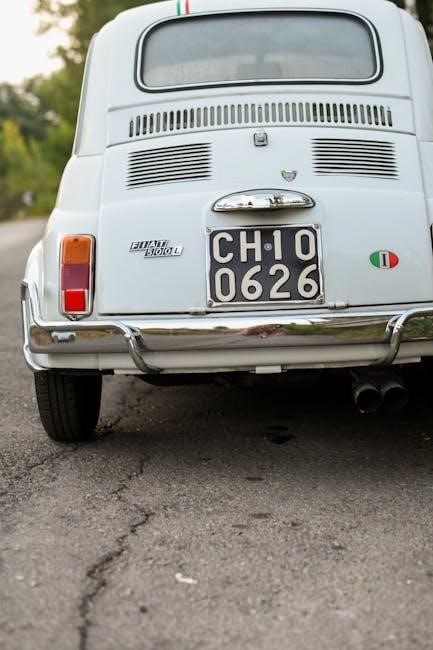
Dedicated forums‚ such as those specializing in the Fiat Panda or Ducato‚ demonstrate the strength of the Fiat community. They serve as a central hub for troubleshooting common issues‚ discussing modifications‚ and accessing repair guides. You can ask specific questions about your 500 and receive tailored responses.
These communities often archive solutions to frequently encountered problems‚ saving you time and potential repair costs. Sharing photos and experiences further enriches the collective knowledge base. Active participation fosters a supportive environment for all Fiat owners‚ enhancing the ownership experience.
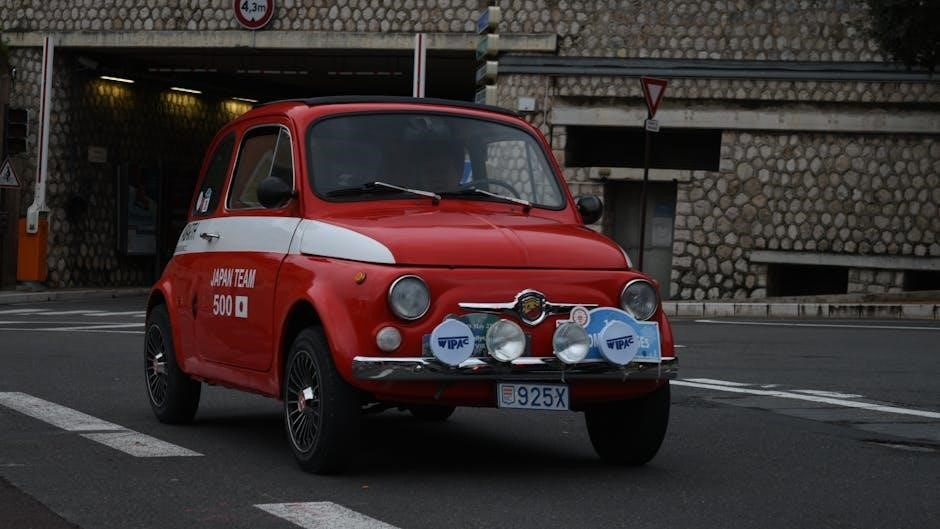
Accessing Repair Manuals & Guides
Locating comprehensive repair manuals and guides is crucial for effective Fiat 500 maintenance and repair. While a physical manual often accompanies the vehicle‚ digital resources offer expanded accessibility and detail.
Leveraging online platforms alongside resources like Fiat ePER and openPER‚ which provide parts catalogues and diagrams‚ significantly aids in understanding vehicle systems. These tools are particularly useful when diagnosing issues or performing component replacements.
User manuals‚ like the “2012 Fiat 500 Repair Manual”‚ serve as a personal tutor‚ guiding owners through operation and maintenance. Supplementing these with forum discussions and dedicated online guides ensures a thorough understanding of your vehicle. Remember to prioritize safety and consult qualified professionals when tackling complex repairs.