
field guide to american houses
American residential architecture reflects a diverse history, blending European traditions with regional innovations, as detailed in comprehensive style guides and field guides.
From Colonial roots to Mid-Century Modern designs, understanding these styles—like those found in Washington State—is crucial for designers and homeowners alike.
Guides, such as The Abrams Guide, offer visual tours, while resources from DAHP provide concise overviews of styles evolving from 1860-1990.
Historical Overview of American Residential Architecture
American home styles evolved significantly, beginning with Colonial architecture brought by European settlers in the 17th and 18th centuries. These early homes, like New England Colonials, prioritized practicality and reflected regional materials.
The 19th century witnessed a surge in stylistic diversity, including Georgian, Federal, Victorian (Queen Anne and Italianate), Greek Revival, and Gothic Revival, each showcasing distinct aesthetic principles.
The early 20th century introduced Arts and Crafts/Craftsman, Prairie, and Tudor Revival styles, emphasizing natural materials and unique design elements. Later, Mid-Century Modern emerged, prioritizing clean lines and integration with the outdoors, as highlighted in various architectural guides.
Geographic Influences on House Design
American house styles are deeply influenced by regional climates and available materials. New England Colonials, for example, feature steep roofs to manage snow, while Southern Colonial homes often include wide verandas for shade and ventilation.
The Mediterranean Style flourished in warmer climates like California and Florida, utilizing stucco and red tile roofs. The Prairie Style, originating in the Midwest, embraced horizontal lines mirroring the flat landscape.
Washington State’s architectural styles, documented by DAHP, reflect its unique environment. Understanding these geographic impacts is vital when identifying and appreciating the diversity of American residential architecture, as detailed in comprehensive field guides.
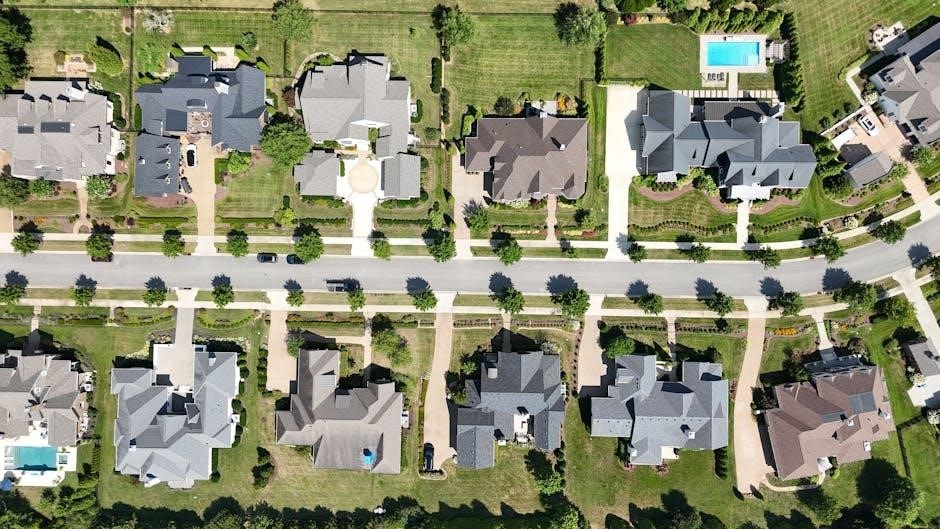
Colonial House Styles
Colonial homes, originating from European settlers, showcase symmetry and formality, evolving into distinct regional variations like New England and Georgian styles.
These styles, detailed in architectural guides, represent early American building traditions and continue to influence design today.
New England Colonial (1620-1750)
New England Colonial homes, built between 1620 and 1750, represent the earliest American architectural forms, heavily influenced by English building traditions. These structures typically feature a simple, rectangular shape, a steep gabled roof, and central chimneys.
Wood siding, often clapboard, is a common exterior material, and windows are frequently multi-paned with shutters. A prominent entry door, often adorned with a decorative crown, adds to the home’s dignified appearance. Interiors were characterized by a central hall plan with rooms arranged symmetrically around it.
These homes prioritized practicality and resilience against the harsh New England climate, embodying a functional and understated aesthetic, as documented in various architectural style guides.
Characteristics of New England Colonial Homes
Key characteristics define New England Colonial homes, including a symmetrical façade, typically five bays wide, with a centered front door. Steeply pitched roofs and central chimneys are hallmarks, providing efficient heating and drainage. Wood clapboard siding is prevalent, often unpainted or painted in muted tones.
Windows are generally double-hung with multi-pane glass, frequently adorned with wooden shutters. Interiors feature a central hall flanked by rooms, emphasizing functionality. Simple ornamentation and a focus on practicality define the aesthetic, reflecting the settlers’ resourcefulness.
These details, as outlined in architectural guides, create a distinctly recognizable and historically significant style.
Georgian Colonial (1700-1783)
Georgian Colonial architecture, flourishing from 1700 to 1783, embodies symmetry and formality, influenced by British designs. Homes exhibit a balanced façade, often with a centered front door crowned by a decorative crown or pediment. Brick or wood siding is common, showcasing a refined aesthetic.
Symmetrical window arrangements and paneled doors contribute to the style’s elegance; Interiors feature formal layouts with grand staircases and detailed moldings. This style reflects the growing prosperity and sophistication of the colonies.
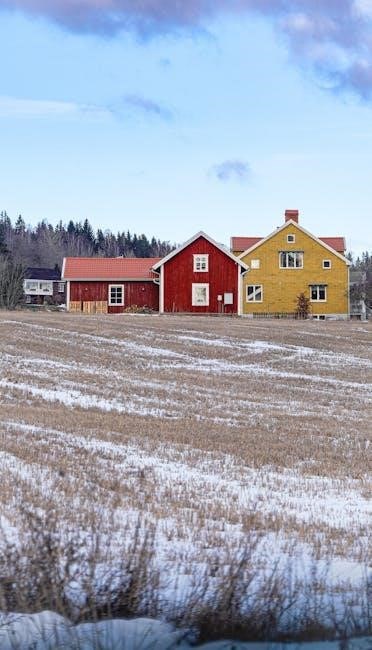
Guides highlight Georgian Colonial as a pivotal style in American architectural history.
Key Features of Georgian Architecture
Georgian architecture is defined by its emphasis on classical proportions and symmetrical design. Key features include a formal, rectangular shape and a moderately pitched roof, often concealed by a decorative cornice. Paired chimneys flank the sides, adding to the balanced appearance.
Window placement is meticulously symmetrical, frequently featuring multi-pane windows with shutters. The front door, a focal point, is typically adorned with a decorative crown or pediment. Materials commonly include brick and wood.
These elements create a sense of order and refinement, hallmarks of the Georgian style.
Federal Style (1780-1830)
Federal style emerged post-Revolutionary War, showcasing a refined adaptation of Georgian aesthetics. It’s characterized by delicate detailing and a lighter, more graceful appearance. While retaining symmetry, Federal homes often feature elliptical fanlights above doorways and circular or oval rooms within.
Decorative swags, urns, and festoon motifs are common, reflecting neoclassical influences. Window crowns and sidelights add elegance. Brick construction remains prevalent, but often painted white or pale colors.
This style represents a distinctly American expression of architectural sophistication.
Distinguishing Elements of Federal Homes
Key identifiers of Federal homes include their low-pitched roofs often adorned with a balustrade. Look for symmetrical facades, typically five bays wide, with a central entrance emphasized by an elaborate doorway featuring a fanlight and pilasters.
Decorative swags and oval-shaped rooms are hallmarks. Window detailing is refined, with multi-pane windows and delicate window crowns. Brick or wood siding, frequently painted white, contributes to the style’s elegance.
These subtle yet significant details collectively define the Federal aesthetic, showcasing a refined and distinctly American architectural expression.
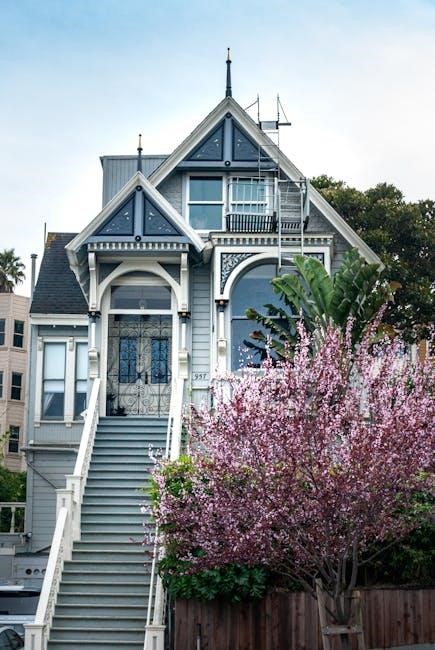
19th Century House Styles
The 1800s witnessed a flourish of styles—Victorian, Greek Revival, and Gothic Revival—each reflecting cultural shifts and technological advancements in American home design.
Identifying these styles requires attention to details like ornamentation, rooflines, and overall form, as detailed in architectural guides.
Victorian Architecture (1837-1901)
Victorian architecture, spanning much of the 19th century, represents a period of ornate design and eclectic influences. This era, coinciding with Queen Victoria’s reign, produced diverse substyles, notably Queen Anne and Italianate.
Queen Anne Victorian homes are characterized by asymmetrical facades, elaborate detailing, towers, and vibrant color schemes. Italianate Victorian styles, conversely, feature low-pitched roofs, wide eaves with brackets, and tall, narrow windows, often evoking Tuscan villas.
Guides emphasize recognizing these features—decorative trim, bay windows, and patterned shingles—to accurately identify Victorian homes, showcasing a romantic and detailed aesthetic.
Queen Anne Victorian
Queen Anne Victorian homes, a prominent style within the broader Victorian era, are instantly recognizable for their asymmetrical facades and playful ornamentation. These residences frequently boast prominent front-facing gables, decorative spindlework, and elaborate porch detailing, creating a visually dynamic appearance.
A defining characteristic is the use of varied textures and materials, including patterned shingles, bay windows, and towers, often painted in multiple, vibrant colors. These homes represent a departure from symmetry, embracing individuality and artistic expression.
Identifying these features is key when using a field guide, showcasing the style’s romantic and whimsical nature.
Italianate Victorian
Italianate Victorian architecture, flourishing during the mid-19th century, draws inspiration from Italian villas, adapting them for American tastes. A key identifier is the low-pitched or flat roof, often adorned with elaborate bracket supports under the eaves, creating a distinctive overhanging cornice.
Tall, narrow windows, frequently arched or with decorative hood moldings, are common, as are symmetrical facades and often a square cupola. These homes often feature ornate detailing around windows and doors, and substantial porches.
A field guide will highlight these features, showcasing the style’s elegance and refined aesthetic.
Greek Revival (1825-1860)
Greek Revival architecture, popular in the first half of the 19th century, embodies a strong connection to classical Greek temples. A defining characteristic is the prominent, full-width front porch supported by large, imposing columns—often Doric, Ionic, or Corinthian—resembling ancient Greek structures.
These homes typically feature a low-pitched gable roof, symmetrical facades, and a restrained color palette, often white to mimic marble. Decorative elements are minimal, emphasizing clean lines and geometric forms.
A field guide will emphasize identifying these classical influences and the style’s overall sense of grandeur.
Classical Influences in Greek Revival Design
Greek Revival’s core aesthetic stems directly from ancient Greek temple architecture, evident in its meticulous replication of classical orders. The use of Doric, Ionic, and Corinthian columns isn’t merely decorative; it’s a structural and symbolic homage to Greek ideals of democracy and reason.
Pediments, often triangular, adorn the entrance, mirroring temple frontons. Symmetrical facades and restrained ornamentation further emphasize balance and harmony—key principles of classical design.
A field guide highlights recognizing these elements, understanding how American architects adapted classical forms to residential structures, and appreciating the cultural significance of this stylistic choice.

Gothic Revival (1830-1880)
Gothic Revival architecture emerged as a reaction against Neoclassical formality, embracing medieval aesthetics and romantic ideals. A field guide to American houses reveals key features like pointed arches—over windows and doorways—and steeply pitched roofs, reminiscent of church architecture.
Elaborate, decorative trim, often featuring quatrefoils and finials, adds visual complexity. Verticality is emphasized through tall, slender windows and towers, creating a sense of aspiration.
Understanding these elements allows identification of Gothic Revival homes, appreciating their unique blend of historical inspiration and American craftsmanship.
Pointed Arches and Decorative Trim
Pointed arches define Gothic Revival homes, appearing above doorways and windows, instantly evoking medieval cathedrals. These aren’t merely structural; they’re a stylistic statement, differentiating these homes from their contemporaries.
Decorative trim is equally crucial, showcasing intricate details like quatrefoils, finials, and elaborate bargeboards. This ornamentation isn’t subtle; it’s designed to draw the eye and emphasize the verticality of the structure.
A field guide highlights how these elements combine to create a romantic, picturesque aesthetic, marking a departure from the restrained classicism of earlier styles.
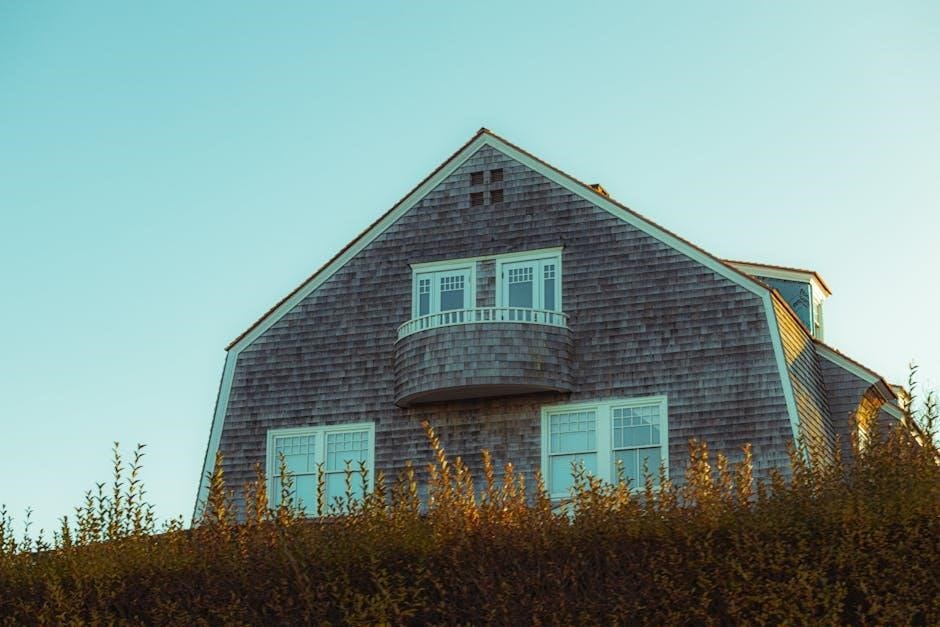
Early 20th Century House Styles
Early 20th-century styles, including Arts and Crafts, Prairie, and Tudor Revival, represent a shift towards unique aesthetics and handcrafted details.
These designs, detailed in architectural guides, showcase regional influences and a rejection of Victorian excess.
Arts and Crafts/Craftsman (1905-1930)
Arts and Crafts and Craftsman homes, popular from 1905 to 1930, embody a reaction against industrialization, prioritizing handmade quality and natural materials.
Key features include low-pitched gable roofs with wide eaves, exposed rafters, and prominent front porches supported by thick, tapered columns.
Interior spaces emphasize built-in cabinetry, wood paneling, and fireplaces constructed from stone or brick, creating a warm and inviting atmosphere.
This style, as highlighted in architectural guides, values simplicity, functionality, and a harmonious connection with the surrounding landscape, reflecting a commitment to honest craftsmanship.
Emphasis on Natural Materials
Arts and Crafts/Craftsman architecture fundamentally prioritizes the use of natural materials, rejecting the mass-produced aesthetic of the industrial era.
Wood is central, appearing in siding, trim, interior paneling, and built-in furniture, showcasing its grain and texture.
Stone and brick are frequently employed for foundations, chimneys, and fireplaces, adding weight and a sense of permanence.
This commitment to authenticity, as detailed in architectural style guides, extends to handcrafted details, celebrating the skill of artisans and fostering a connection to nature.
Prairie Style (1900-1920)
Prairie Style, pioneered by architects like Frank Lloyd Wright, emerged as a distinctly American response to European architectural traditions.
Characterized by horizontal lines that echo the flat landscapes of the Midwest, these homes emphasize integration with their surroundings.
Open floor plans create a sense of spaciousness and flow, while overhanging eaves and low-pitched roofs further accentuate the horizontal emphasis.
As highlighted in architectural guides, Prairie Style homes often feature bands of casement windows and natural materials, embodying a harmonious blend of form and function.
Horizontal Lines and Open Floor Plans
Horizontal lines are a defining characteristic of Prairie Style homes, visually connecting the dwelling to the expansive Midwestern landscape.
This emphasis is achieved through low-pitched roofs, broad eaves, and continuous bands of windows, creating a sense of grounded stability.
Complementing these lines are open floor plans, a revolutionary concept for the time, fostering a fluid and interconnected living space.
These layouts prioritize functionality and sociability, moving away from the compartmentalized rooms of earlier styles, as detailed in architectural style guides.
Tudor Revival (1890-1940)
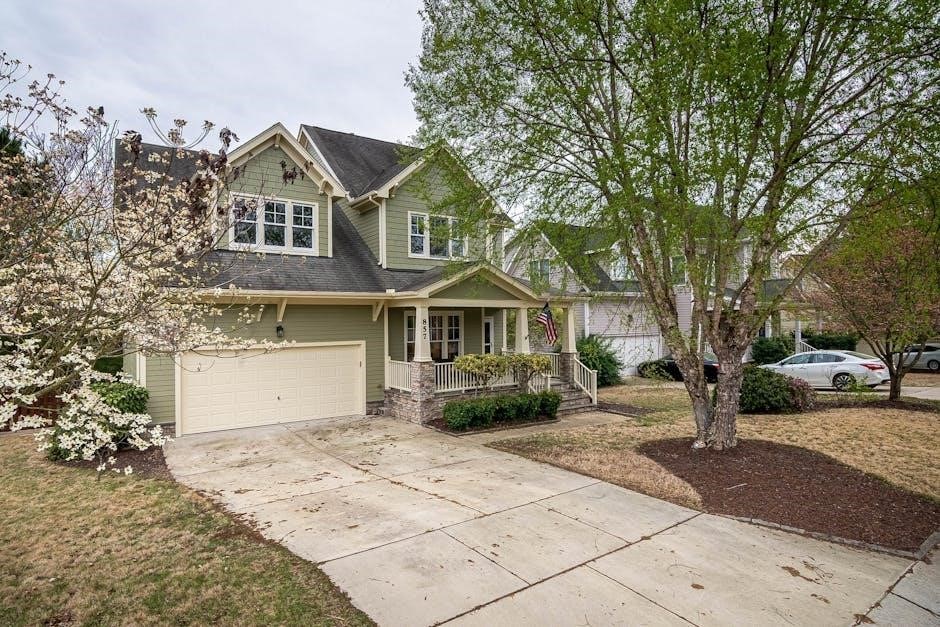
Tudor Revival architecture, popular from 1890 to 1940, draws inspiration from medieval English homes, offering a romantic and picturesque aesthetic.
Steeply pitched roofs are a hallmark, often adorned with decorative half-timbering – a non-structural application of wood framing creating a distinctive pattern.
Prominent gables, tall and narrow windows with multi-pane casements, and massive chimneys further contribute to the style’s character.
These homes frequently feature elaborate doorways and brick or stone facades, evoking a sense of history and craftsmanship, as outlined in American house style guides.
Steeply Pitched Roofs and Decorative Half-Timbering
Steeply pitched roofs are a defining characteristic of Tudor Revival homes, creating a dramatic and visually striking silhouette reminiscent of medieval English architecture.
Complementing these roofs is decorative half-timbering, a non-structural application of dark wood framing against lighter stucco or brick infill.
This pattern isn’t load-bearing but provides the iconic Tudor aesthetic, often extending to gables and upper stories.
These elements, detailed in architectural style guides, work together to evoke a sense of history and craftsmanship, distinguishing Tudor Revival homes from other styles.

Mid-20th Century House Styles
Mid-Century Modern and Ranch styles dominated post-war America, prioritizing functionality and accessibility, as highlighted in design briefs and architectural guides.
Mid-Century Modern (1945-1970)
Mid-Century Modern architecture, flourishing from 1945 to 1970, represents a significant departure from preceding styles, emphasizing a connection between indoor and outdoor living spaces.
Characterized by clean lines, minimal ornamentation, and a focus on functionality, these homes often feature large windows and open floor plans, integrating seamlessly with nature.
Despite sometimes being mislabeled as simply “modern” – a common error noted in design discussions – this period holds a distinct aesthetic within design language.
Influential to this day, Mid-Century Modern continues to shape contemporary design aesthetics, making its identification crucial for both designers and homeowners, as detailed in various architectural guides.
Clean Lines and Integration with Nature
Mid-Century Modern homes are instantly recognizable by their emphasis on clean, horizontal lines and a deliberate lack of excessive ornamentation, creating a sense of calm and simplicity.
A defining characteristic is the strong integration with nature, achieved through expansive glass walls, sliding doors, and strategically placed windows that blur the boundaries between interior and exterior spaces.
This design philosophy prioritizes bringing the outdoors in, fostering a connection with the surrounding landscape and maximizing natural light.
The aesthetic promotes open floor plans and a relaxed lifestyle, reflecting a post-war optimism and a desire for functional, yet stylish, living spaces.
Ranch Style (1930s-1970s)
Ranch-style homes, popular from the 1930s through the 1970s, embody a distinctly American ideal of casual, comfortable living. These residences are almost universally single-story, promoting accessibility and ease of movement throughout the home.
A hallmark feature is the attached garage, often prominently visible from the street, reflecting the growing importance of the automobile in American culture.
Ranch homes typically feature low-pitched roofs, large windows, and an open floor plan, creating a spacious and inviting atmosphere.
Their simplicity and practicality made them incredibly popular with returning veterans and growing families.
Single-Story Living and Attached Garages
Ranch-style homes prioritize single-story living, a significant departure from earlier, multi-level designs. This layout offered convenience and accessibility, appealing to a broad range of homeowners, particularly those with young children or aging family members.
Equally defining is the prevalence of the attached garage, a feature that rose in prominence alongside the increasing ownership of automobiles in mid-20th century America.
The garage wasn’t merely an afterthought; it often became a focal point of the facade, directly accessible from the interior of the house.
This practical design reflected a changing lifestyle.
Contemporary & Regional Styles
Modern American homes showcase diverse regional influences, including Mediterranean, Farmhouse, and Modern Farmhouse styles, blending tradition with contemporary aesthetics.
Mediterranean Style (1920s-Present)
Mediterranean Style homes, popular since the 1920s, evoke the warmth of Spain and Italy, adapting beautifully to warmer American climates. Stucco walls are a defining characteristic, often in earthy tones, creating a textured and visually appealing exterior.
Red tile roofs are another hallmark, providing both aesthetic charm and practical durability. These homes frequently feature arched doorways and windows, adding to the romantic and Old-World feel. Courtyards and patios are common, designed for outdoor living and entertaining.
Interior spaces often incorporate dark wood beams, decorative ironwork, and vibrant tile accents, completing the Mediterranean ambiance. This style continues to be popular, offering a timeless and inviting aesthetic.
Stucco Walls and Red Tile Roofs
Stucco walls are central to the Mediterranean aesthetic, offering a textured, durable finish often in warm, earthy hues. This material provides excellent insulation and a classic, timeless appearance, defining the exterior character of these homes.
Complementing the stucco, red tile roofs are equally iconic, lending a vibrant splash of color and a sense of Old-World charm. These roofs are not only visually appealing but also highly resistant to weather, ensuring longevity.
The combination creates a distinctive look, evoking the sun-drenched landscapes of Spain and Italy, and remains a signature element of Mediterranean-inspired architecture in America.
Farmhouse Style (1800s-Present)
Farmhouse style, originating in the 1800s and continuing today, prioritizes practicality and a welcoming atmosphere. Originally built for agrarian living, these homes emphasize functionality and a connection to the land, showcasing rustic charm.
Key features include simple, rectangular shapes, often with large porches perfect for relaxing and enjoying the outdoors. The design focuses on practical design, built to withstand the demands of rural life.
This enduring style has seen a resurgence in popularity, blending historical elements with modern comforts, making it a beloved choice for homeowners seeking a cozy and inviting space.
Rustic Charm and Practical Design
Farmhouse architecture beautifully embodies rustic charm through natural materials and unpretentious aesthetics. Exposed beams, wide-plank flooring, and shiplap walls contribute to a warm, inviting atmosphere, reminiscent of simpler times.
However, this style isn’t solely about aesthetics; practical design was paramount. Large kitchens were central for food preservation, while durable materials ensured longevity against the elements.
The focus remained on functionality, with layouts designed for efficient living and working. Today’s farmhouse revival honors this heritage, blending comfort with a timeless, down-to-earth appeal.
Modern Farmhouse (2010s-Present)
Modern Farmhouse style, gaining prominence since the 2010s, represents a compelling fusion of rustic and contemporary elements. This popular aesthetic blends the warmth of traditional farmhouse design with clean, streamlined modern sensibilities.
Expect to see shiplap and exposed beams paired with sleek, minimalist lighting and stainless steel appliances. Neutral color palettes—whites, grays, and beiges—dominate, creating a bright and airy feel.
This style prioritizes open-concept living, comfortable furnishings, and a relaxed atmosphere, appealing to those seeking a blend of comfort and sophistication in their homes.
Blending Modern and Rustic Elements
Modern Farmhouse excels at harmonizing contrasting design philosophies. Rustic features—like reclaimed wood, exposed beams, and shiplap—provide warmth and texture, grounding the space in a sense of history and authenticity.
These elements are then balanced by modern touches: clean lines, neutral color palettes, and streamlined fixtures. This juxtaposition creates a visually appealing and inviting atmosphere.
The successful blend relies on thoughtful curation, ensuring neither style overwhelms the other, resulting in a comfortable, sophisticated, and uniquely American aesthetic.

Identifying Architectural Details
Key details—roof types, window styles, and door designs—are essential for pinpointing a home’s architectural style, as highlighted in guides by Blumenson and Baker.
Roof Types and Their Significance
Roof styles are fundamental identifiers in American architecture, reflecting both aesthetic preferences and practical considerations. Colonial homes often feature gable roofs, simple and efficient for shedding snow, while Georgian styles showcase hip roofs, conveying symmetry and formality.
Victorian architecture embraces a variety of complex rooflines, including mansard and gable-and-hip combinations, adding to the ornate character. Mediterranean styles are defined by low-pitched tile roofs, suited for warmer climates. Understanding these variations, as detailed in architectural guides, allows for accurate identification and appreciation of a home’s historical context.
The roof’s shape often signals the era and regional influences of the building.
Window Styles and Their Historical Context
Window styles provide crucial clues to a home’s age and architectural lineage. Early Colonial homes typically featured small, multi-paned casement windows, reflecting the available glass-making technology. Georgian architecture embraced symmetrical arrangements of larger, double-hung windows, emphasizing balance and proportion.
Victorian windows often incorporated decorative elements like stained glass and elaborate trim, showcasing craftsmanship. Mid-Century Modern designs favored expansive picture windows, integrating indoor and outdoor spaces. Identifying these details, as highlighted in architectural guides, aids in accurately dating and categorizing American house styles.
Window design evolved alongside building techniques and aesthetic trends.
Door Styles and Decorative Elements
Door styles, alongside windows, are key identifiers in American architectural history. Colonial doors often featured paneled designs and modest ornamentation, reflecting practicality and simplicity. Georgian homes showcased grand, symmetrical entryways with decorative crown molding and sidelights, emphasizing elegance.
Victorian doors embraced elaborate carvings, stained glass inserts, and ornate hardware, displaying a penchant for detail. Craftsman style favored solid wood doors with simple, natural finishes. Analyzing these elements, as detailed in style guides, helps pinpoint a home’s era and influences.
Decorative elements reveal a home’s character.